
Call us now :08045815584
 Send Inquiry
 Send Inquiry
Nylon Syringe Filters
Nylon Syringe Filters Specification
- Features
- Hydrophilic, low extractables, compatible with aqueous and organic solvents, high flow rate
- Control Type
- Manual
- Temperature Resistance
- Up to 60C
- Shape
- Circular
- Accuracy
- Particle retention to specified pore size (0.22 m/0.45 m)
- Type
- Nylon Syringe Filters
- Dimension (L*W*H)
- 13 mm, 25 mm, 33 mm (diameter options)
- Equipment Type
- Disposable laboratory filtration device
- Equipment Materials
- Nylon membrane, Polypropylene (PP) housing
- Material
- Nylon (Polyamide) membrane
- Application
- Liquid filtration, clarification, sample preparation, sterile filtration
- Color
- Transparent housing
- Packaging
- Individually packed or bulk packaging options
- Maximum Operating Pressure
- Up to 87 psi (6 bar)
- Connection
- Luer lock inlet and Luer slip outlet
- Filtration Area
- 13 mm filter: ~1.3 cm², 25 mm filter: ~4.5 cm²
- Chemical Compatibility
- Suitable for most aqueous and organic solvents
- Pore Size
- 0.22 µm, 0.45 µm
About Nylon Syringe Filters
We are engaged in exporting and supplying unique range of Nylon Syringe Filters to our esteemed customers. These products are used to purify the syringe. The purification is done by filling the syringe with a mixture and then forcing mixture fluid out through this filter. Furthermore, these filters are widely used in nursing homes, laboratory, educational institutes, hospitals and forensic labs. These products are thoroughly checked and tested on various required parameters during the procurement process so that our available products are free from any defect and comply with the set industry quality standards. Clients can avail these products at industry leading prices from us.Reliable Filtration for Laboratory Applications
Nylon Syringe Filters are indispensable for laboratories focused on sample preparation, clarification, and sterile filtration. Their robust nylon membrane ensures efficient particle retention at specified pore sizes of 0.22 m or 0.45 m. The hydrophilic nature of the filter facilitates rapid flow rates while minimizing extractables, making them highly reliable for both aqueous and organic solvent applications.
Flexible Sizing and Easy Integration
Available in 13 mm, 25 mm, and 33 mm diameters, these filters offer flexibility for different sample volumes. The Luer lock inlet and Luer slip outlet ensure secure attachment to standard laboratory syringes, optimizing convenience and safety during operation. Choose between individual or bulk packaging according to your laboratory needs.
High Chemical Compatibility and Temperature Resistance
Constructed with a nylon (polyamide) membrane and polypropylene housing, these syringe filters demonstrate excellent chemical resistance. They function efficiently at temperatures up to 60C, catering to a wide range of laboratory environments. Their compatibility with most solvents enhances their versatility in diverse analytical workflows.
FAQs of Nylon Syringe Filters:
Q: How are nylon syringe filters used in laboratory applications?
A: Nylon syringe filters are connected to a standard laboratory syringe using the Luer lock inlet and Luer slip outlet. After drawing the sample into the syringe, the filter is used to pass liquids through the membrane, removing particulates and preparing samples for analysis or sterile applications.Q: What types of solvents can be filtered using these nylon syringe filters?
A: These filters are compatible with most aqueous and organic solvents due to the hydrophilic nylon membrane and polypropylene housing, making them suitable for a broad range of liquid samples in chemical and biological laboratories.Q: When should I choose a 0.22 m versus a 0.45 m pore size filter?
A: Use a 0.22 m filter when fine particle removal or sterile filtration is required, whereas a 0.45 m filter is ideal for general clarification or pre-filtration when slightly larger particulates are acceptable in the filtrate.Q: Where are these nylon syringe filters commonly used?
A: These filters are commonly used in research laboratories, pharmaceutical facilities, and environmental testing labs across India and globally, wherever precise liquid filtration, clarification, or sterile sample preparation is necessary.Q: What is the process for properly disposing of a used syringe filter?
A: As disposable devices, used syringe filters should be discarded in accordance with laboratory waste management protocols, taking into account the nature of the filtered material, and following local hazardous waste disposal regulations.Q: What advantages do nylon syringe filters offer over other types?
A: Nylon syringe filters provide high flow rates, low extractables, and broad chemical compatibility, making them versatile and efficient for both aqueous and organic solutions. Their transparent housing allows for easy visual inspection during filtration.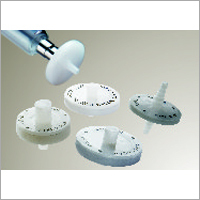
Tell us about your requirement

Price:
Quantity
Select Unit
- 50
- 100
- 200
- 250
- 500
- 1000+
Additional detail
Mobile number
Email


 Send Inquiry
27/29, Popatwadi, Kalbadevi,Mumbai - 400002, Maharashtra, India

Mr. Manoj Vakharia
(Partner)
Mobile :08045815584
 Send Inquiry
 Send SMS
Developed and Managed by Infocom Network Private Limited.
