
Call us now :08045815584
 Send Inquiry
 Send Inquiry
Small Test Sieves
Small Test Sieves Specification
- Accuracy
- Mesh opening as per ASTM/IS standards
- Temperature Resistance
- Upto 200C; depends on frame material
- Control Type
- Manual
- Shape
- Round
- Type
- Test Sieve
- Dimension (L*W*H)
- Diameter: 75 mm to 200 mm (typical); Height: 25 mm to 50 mm (varies per manufacturer)
- Equipment Type
- Laboratory Sieve
- Equipment Materials
- Stainless Steel / Brass (frame and mesh)
- Power
- Not Required (Manual Operation)
- Material
- Stainless Steel, Brass
- Usage
- Soil, aggregate, powders, chemicals, pharmaceuticals, cement labs
- Mesh Material
- Stainless Steel, Phosphor Bronze
- Mesh Options
- Available in a range of mesh sizes from 20 microns up to 10 mm
- Sieve Depth
- Full height and half height options available
- Frame Finish
- Polished or mirror finish
- Compliance
- Conforms to ASTM, ISO, and IS sieve standards
- Marking
- Each sieve is stamped with mesh size and serial number on the frame
About Small Test Sieves
Clients can avail an exclusive range of Small Test Sieves from us. These products are manufactured using high quality materials and with the latest technology and a team of promising professionals in order to sync with the International standards. Furthermore, These products are thoroughly checked and tested on various required parameters during the procurement process so that our available products are free from any defect and comply with the set industry quality standards. Clients can avail these products at industry leading prices from us.Versatile Mesh Options
Select from a comprehensive range of mesh sizes, from ultra-fine 20 microns up to 10 mm. This broad spectrum makes the sieves suitable for separating and classifying materials across various industries, including soils, aggregates, chemicals, pharmaceuticals, and cement. Whether for routine testing or specialized research, there is a mesh size to address every need.
Robust Construction and Compliance
Constructed with premium stainless steel or brass for both frame and mesh, these laboratory sieves offer remarkable durability and resistance to corrosion. Each sieve conforms to stringent ASTM, ISO, and IS standards. Their high-precision construction ensures mesh opening accuracy and reliable, repeatable results. Optional full or half height configurations provide further flexibility for different sample volumes and materials.
User-Friendly Identification & Operation
Every sieve is clearly stamped with its mesh size and a unique serial number, ensuring traceability and simplifying inventory management. Designed for manual operation, no power source is requiredmaking them reliable tools in any testing environment. Their temperature resistance up to 200C further widens their scope of applications, from routine lab testing to specialized industrial analysis.
FAQs of Small Test Sieves:
Q: How do I select the correct mesh size for my application?
A: Choosing the appropriate mesh size depends on the particle size range you need to analyze. For finer materials like powders or pharmaceuticals, a smaller mesh (such as 20 microns) is ideal. For coarse aggregates or soils, larger mesh sizes up to 10 mm are recommended. Consider your material specifications and the standards relevant to your industry (ASTM, ISO, IS) when making your selection.Q: What materials are used to construct these test sieves?
A: Our test sieves feature frames and mesh made from high-quality stainless steel or brass. Stainless steel offers excellent resistance to corrosion and high temperatures, while phosphor bronze mesh is also available. Both materials provide longevity, reliable performance, and chemical compatibility, making them suitable for a wide range of laboratory applications.Q: When should I use full height versus half height sieves?
A: Full height sieves are commonly used when testing larger specimen volumes or materials prone to clogging, as they offer greater capacity. Half height sieves enable improved efficiency when stacking multiple sieves and handling finer samples, often used in applications where space is limited or finer fractions are being analyzed.Q: Where can these laboratory sieves be utilized?
A: These sieves are widely applicable in laboratories focusing on soils, aggregates, chemicals, pharmaceuticals, cement, and other materials science fields. They are ideal for use in educational, research, and industrial labs across India and internationally by exporters, suppliers, and traders.Q: How are the mesh size and serial number displayed on each sieve?
A: Each sieve is permanently stamped on the frame with its mesh size and unique serial number. This clear, durable marking guarantees traceability throughout its use, ensuring compliance with quality control standards and simplifying inventory tracking processes.Q: What are the benefits of the polished or mirror finish on the sieve frames?
A: A polished or mirror finish enhances the corrosion resistance of the sieve frame, allows for easier cleaning, and minimizes the risk of material contamination during use. Additionally, it provides a professional appearance, reinforcing the sieves suitability for rigorous laboratory environments.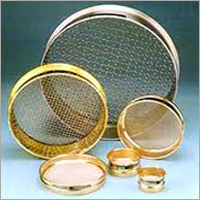
Tell us about your requirement

Price:
Quantity
Select Unit
- 50
- 100
- 200
- 250
- 500
- 1000+
Additional detail
Mobile number
Email

More Products in Sieves & Shakers Category
Plastic Test Sieves
Type : Other, Plastic Test Sieve
Capacity (Ltr) : Depends on sieve size, typically 13 liters
Speed Range : Manual operation
Shape : Round
Control Type : Manual
Equipment Materials : Plastic frame, mesh can be plastic or stainless steel

 Send Inquiry
27/29, Popatwadi, Kalbadevi,Mumbai - 400002, Maharashtra, India

Mr. Manoj Vakharia
(Partner)
Mobile :08045815584
 Send Inquiry
 Send SMS
Developed and Managed by Infocom Network Private Limited.
