
Call us now :08045815584
 Send Inquiry
 Send Inquiry
Plastic Test Sieves
Plastic Test Sieves Specification
- Temperature Resistance
- Suitable for normal laboratory temperatures
- Speed Range
- Manual operation
- Shape
- Round
- Control Type
- Manual
- Accuracy
- High mesh accuracy as per ASTM/ISO standards
- Type
- Plastic Test Sieve
- Dimension (L*W*H)
- Standard diameters: 8 inch (200 mm) or 12 inch (300 mm), Height varies as per mesh depth
- Equipment Type
- Laboratory Sieve
- Equipment Materials
- Plastic frame, mesh can be plastic or stainless steel
- Capacity (Ltr)
- Depends on sieve size, typically 13 liters
- Color
- White or customized
- Stackable
- Yes, designed for multiple sieve stacking
- Frame Diameter Options
- 200 mm, 300 mm, custom sizes available
- Mesh Size Range
- Available from 36 micron to 10 mm as per requirement
- Mesh Material
- Nylon or stainless steel
- Sample Capacity
- Varies with mesh size, typically 502000 grams
- Cleaning Method
- Washable, suitable for ultrasonic cleaning
About Plastic Test Sieves
Owing to rich industry experience and expertise, we are involved in exporting and supplying unique range of Plastic Test Sieves to our esteemed customers. These products are manufactured using high quality materials and with the latest technology and a team of promising professionals in order to sync with the International standards. Our range is thoroughly checked and tested on various required parameters during the procurement process so that our available products are free from any defect and comply with the set industry quality standards. Clients can avail these products at industry leading prices from us.Flexible Mesh and Frame Options
Choose from a mesh size range of 36 microns to 10 mm to suit your analysis. The mesh material can be selected as either durable nylon or corrosion-resistant stainless steel, ensuring compatibility with a variety of samples. With standard diameters of 200 mm and 300 mm, plus the option for custom sizes, these sieves fit seamlessly into most laboratory procedures.
Stackable and Easy to Use
The clear, round design allows for convenient stacking of multiple sieves, speeding up the separation process. Manual operation gives full control over the sifting process. Each sieve is lightweight for effortless handling and optimized for testing up to 2,000 grams of material per sieve, depending on mesh size and sample nature.
Cleaning and Maintenance Advantages
Plastic Test Sieves are simple to maintain. They are fully washable and compatible with ultrasonic cleaning equipment, ensuring a thorough cleaning process and consistent accuracy in results for repeated use. Their resistance to common lab conditions makes them dependable for routine quality control.
FAQs of Plastic Test Sieves:
Q: How do I select the appropriate mesh size for my testing needs?
A: To choose the correct mesh size, consider the particle size you need to analyze. Meshes are available from 36 microns up to 10 mm, allowing precise separation for a variety of granular or powder samples. For best results, refer to ASTM/ISO guidelines relevant to your testing application.Q: What materials are available for the mesh, and when should I use each?
A: Plastic Test Sieves come with either nylon or stainless steel mesh. Nylon is suitable for light-duty, non-abrasive samples, while stainless steel is best for samples requiring higher chemical or abrasion resistance. Select based on the samples properties and your required accuracy.Q: How should I clean and maintain my plastic test sieves?
A: Sieves can be cleaned by gentle washing with water or using ultrasonic cleaning equipment. Ensure that cleaning agents are compatible with both plastic and mesh materials. Regular cleaning prevents clogging and maintains mesh accuracy for consistent test results.Q: Where are these plastic test sieves typically used?
A: These sieves are primarily used in laboratory environments, such as research labs, quality control departments, and educational institutions. Their high accuracy and customization options make them suitable for a range of industries including pharmaceuticals, food, construction, and mining.Q: What is the stacking process for these sieves and why is it beneficial?
A: The round shape and precise construction allow multiple sieves to be stacked securely. This process enables efficient multi-level size separation in a single operation, saving time and ensuring efficient laboratory workflows.Q: What are the sample and capacity limitations for these sieves?
A: Typical sample capacities range from 50 to 2,000 grams, depending on the mesh size and particle characteristics. The total volume each sieve can hold is usually between 1 and 3 liters. For optimal accuracy, do not overload the sieve during testing.Q: What benefits do plastic test sieves offer compared to traditional metal frames?
A: Plastic frames are lightweight, corrosion-resistant, and easier to clean. They also reduce the risk of sample contamination from metal corrosion, especially when using aggressive cleaning agents or testing reactive samples.
Tell us about your requirement

Price:
Quantity
Select Unit
- 50
- 100
- 200
- 250
- 500
- 1000+
Additional detail
Mobile number
Email

More Products in Sieves & Shakers Category
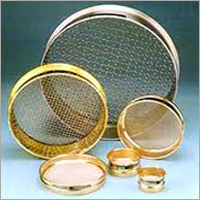
Small Test Sieves
Temperature Resistance : Upto 200C; depends on frame material
Accuracy : Mesh opening as per ASTM/IS standards
Type : Other, Test Sieve
Equipment Materials : Stainless Steel / Brass (frame and mesh)
Shape : Round
Equipment Type : Laboratory Sieve

 Send Inquiry
27/29, Popatwadi, Kalbadevi,Mumbai - 400002, Maharashtra, India

Mr. Manoj Vakharia
(Partner)
Mobile :08045815584
 Send Inquiry
 Send SMS
Developed and Managed by Infocom Network Private Limited.
